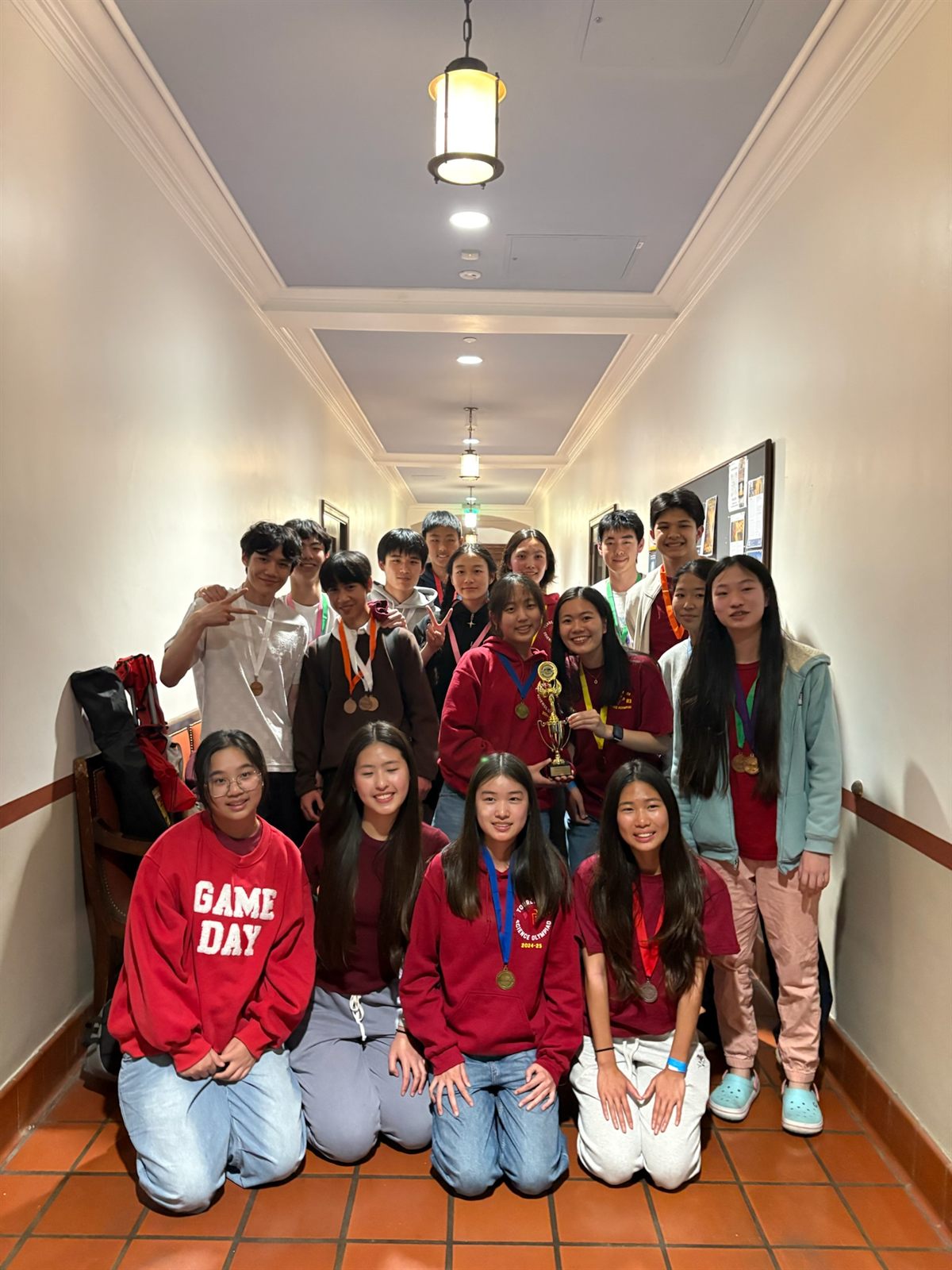
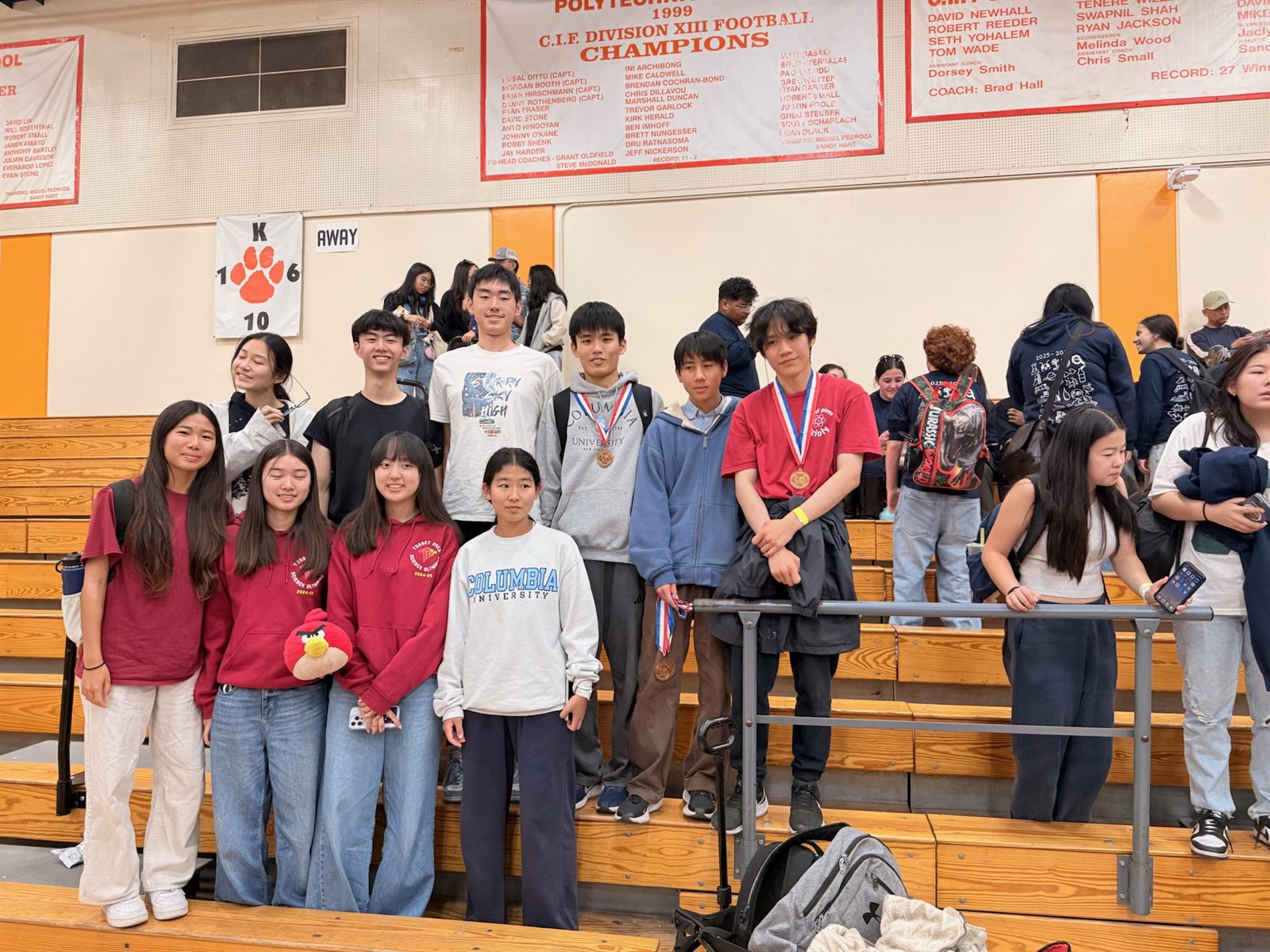
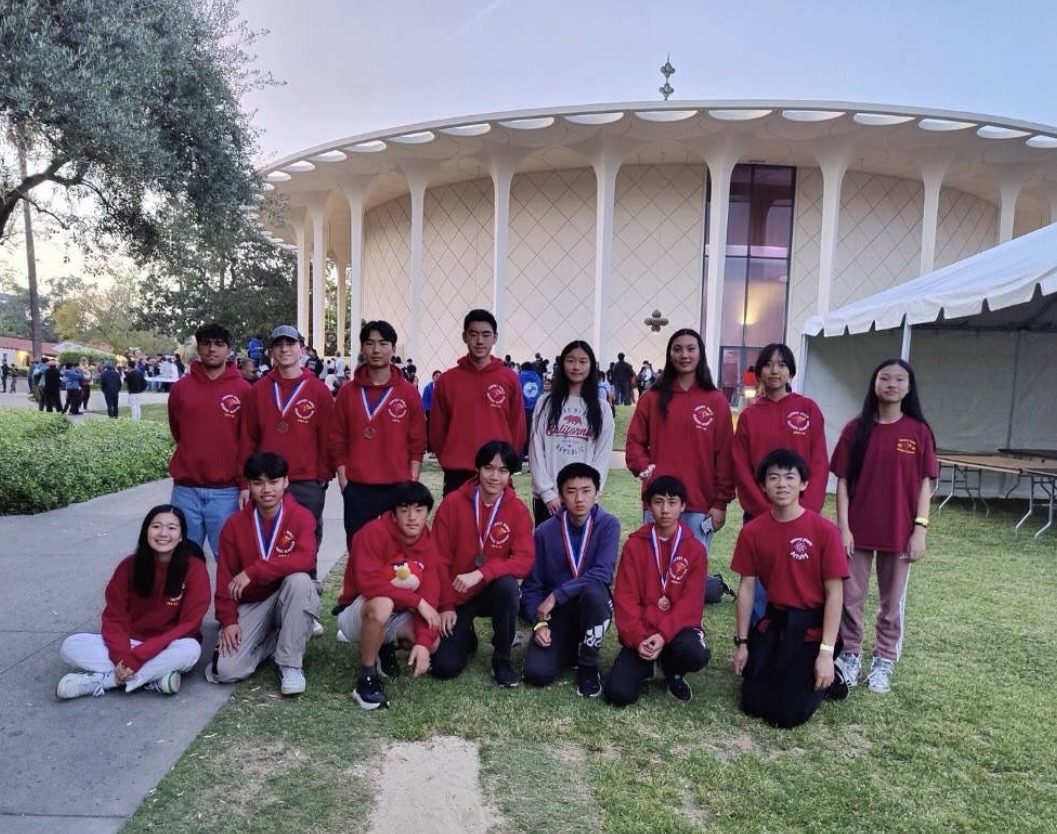
SCIENCE OLYMPIAD DIVISION C SAN DIEGO

Torrey Pines Science Olympiad

TPHS Science Olympiad is a student-and-parent run club that welcomes bright and high-achieving individuals that may be interested in pursuing a STEM related career in the future.

Next up Sep 9 Information meeting Sep 23 Application deadline

Events

Twenty-three events this season, divided into study, lab, and build. Most members compete in three or four of them, with one or two partners on each.

Study events focus on deep knowledge of a specific science topic. You bring a thick binder of notes to answer hard questions during the test.

  • Participants will be assessed on their understanding of the anatomy and physiology for the Nervous, Special Senses, and Endocrine Systems of the human body.

  • Teams will demonstrate an understanding of Stellar Evolution From Formation to Destruction.

  • Science Olympiad hasn't published a description for this event yet.

  • Teams will answer questions, solve problems, and analyze data pertaining to classic, evolutionary, and molecular genetics.

  • Participants will use their investigative skills in the scientific study of disease, injury, health, and disability in populations or groups of people.

  • Teams will complete tasks related to physical and geological oceanography.

  • Participants will use remote sensing imagery, data, and computational process skills to complete tasks related to climate change processes in the Earth system.

  • Teams will identify and classify rocks and minerals and demonstrate knowledge of how rocks and minerals help to understand geologic processes, interpretation of Earth's history, the development of natural resources, and use by society.

  • Teams will cryptanalyze and decode encrypted messages using cryptanalysis techniques for historical and modern advanced ciphers.

Lab events test your skills in hands-on science experiments and data analysis. You must measure items, test reactions, and write down your results quickly.

  • Teams will complete one or more tasks and answer a series of questions involving the Science processes of chemistry, focused in the areas of chemical reactions/stoichiometry and kinetics.

  • Participants must complete tasks and answer questions about electricity and magnetism.

  • Teams will read a set of engineering drawings and collaborate to CAD parts in Onshape and then incorporate these parts with provided components to create an assembly.

  • This event will determine the participant's ability to design, conduct, and report the findings of an experiment entirely on-site.

  • Given a scenario and some possible suspects, students will perform a series of tests. These tests, along with other evidence or test results, will be used to solve a crime.

  • Students will use computer visualization and online resources to construct a physical model of a protein that is being used with CRISPR Cas9 to edit plant and animal genomes.

  • Teams must construct an insulated device prior to the tournament that is designed to retain heat and complete a written test on thermodynamic concepts.

  • Participants will be assessed on their understanding and evaluation of freshwater aquatic environments.

Build events require you to make a working device before the tournament. Judges test your machine to see how well it performs against the rules.

  • Teams will design and build a cantilevered beam or truss structure that extends from a vertical Testing Wall and supports a load at a specified distance from the Testing Wall.

  • Teams design, build, and test one vehicle that uses electrical energy as its sole means of propulsion to travel as quickly as possible and stop close to a Target Point.

  • Prior to the competition, participants will design, construct, and calibrate a self-propelled air-levitated vehicle that moves down a track.

  • Science Olympiad hasn't published a description for this event yet.

  • Prior to the tournament, teams will design, build and bring up to three bottle rockets to the tournament to launch a ping pong ball attached to a parachute to stay aloft for the greatest amount of time.

  • Prior to the competition teams design, construct and test free flight rubber-powered monoplanes to achieve maximum time aloft.

Season Calendar

Three invitationals, then the San Diego regional. Teams that place well there go to the state tournament in April, alongside the top teams from every other Southern California regional.

  1. Sep 9

    Information meeting

    Start here. We explain what the club does, how the events work, and what the year will ask of you, all before you commit to anything.

  2. Sep 23

    Application deadline

    Your application tells us which events you want. We weigh that against your schedule, which events run at the same time on competition day, and any experience you already have.

  3. Sep 27

    Teams released

    We post the event assignments, partners, and team rosters. Weekly meetings start that week, and so does construction for anyone on a build event.

  4. January

    USC Invitational

    The largest in-person Science Olympiad tournament in the country, with both Division B and Division C competing. It runs in January, and we'll post the exact date once registration opens.

  5. February

    Golden Gate Invitational

    Students from Stanford and Berkeley run this one, and it's the largest invitational on the West Coast. Long trip north, and the strongest field you'll see before regionals.

  6. Date TBD

    UCSD Triton Invitational

    UCSD's third year hosting this one, and it's the closest tournament to home. Registration hasn't opened yet, so there's no date to give you.

  7. February

    San Diego Regionals

    Every event runs on one day, and you get a single attempt at it. The top twenty in an event medal, and the highest-placing teams move on to state.

  8. April

    Southern California State

    The top teams from all nine Southern California regionals, and the last competition of the season.

How to Join

There's no entry exam. Come to the information meeting on September 9, get your application in by the 23rd, and you'll have your events and your team by the 27th. We build each schedule around the events people asked for.

What it asks of you

Three or four events, one or two partners on each, and a weekly meeting for every event you're in. The rest is what you and your partner put in between those meetings.

  • We take attendance at event meetings
  • Builds need extra time for construction and testing
  • Competition days last from morning to evening

What you get back

Give your receipts to a coordinator and you get the money back, as long as the purchase was reasonable and went toward your event. Cost shouldn't be the reason anyone skips something.

  • A medal for placing in the top twenty in your event
  • Team trophies based on how everyone on the team places
  • Subjects you won't get in a normal class schedule

Apply

Applications open on September 9. Come to the information meeting, get your application in by the 23rd, and you'll know your events and your team by the 27th.